Analysis date: July 17, 2026
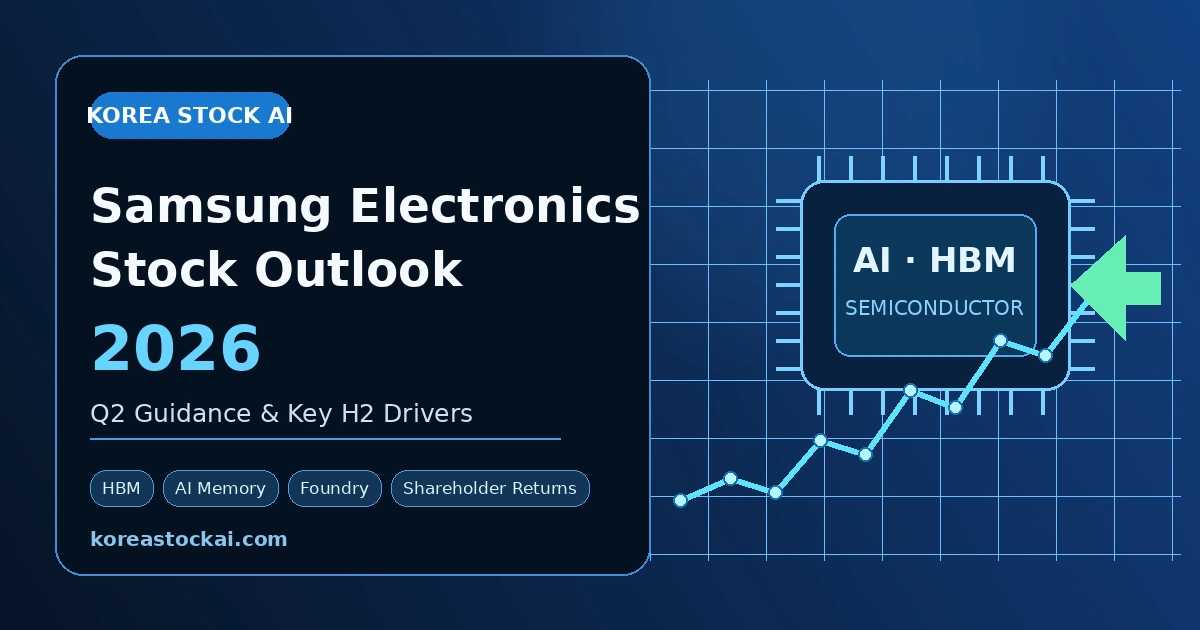
Samsung Electronics reported preliminary consolidated sales of approximately KRW 171 trillion and operating profit of approximately KRW 89.4 trillion for the second quarter of 2026. Although these figures remain subject to external audit, they indicate exceptionally strong earnings momentum ahead of the company’s full quarterly results.
Key Takeaways
- Preliminary Q2 2026 sales were approximately KRW 171 trillion, with operating profit of approximately KRW 89.4 trillion.
- Samsung Electronics will release detailed business-segment results on July 30, 2026.
- HBM4, HBM4E, AI server memory and enterprise SSDs are central to the company’s growth outlook.
- Foundry profitability, memory pricing and the return on large-scale capital expenditure remain major risks.
- The quality and sustainability of earnings matter more than the headline preliminary figures alone.
1. What the Q2 Earnings Guidance Means
Samsung Electronics generated consolidated sales of KRW 133.87 trillion and operating profit of KRW 57.23 trillion in the first quarter of 2026. The second-quarter guidance therefore implies another substantial sequential increase in both revenue and profit.
Compared with the second quarter of 2025, when Samsung reported sales of KRW 74.57 trillion and operating profit of KRW 4.68 trillion, the latest guidance represents a dramatic earnings recovery.
However, preliminary guidance does not disclose the contribution from individual businesses such as memory, foundry, mobile devices, displays and home appliances. Investors must wait for the full earnings release to determine where the profit was generated and whether the improvement is sustainable.
2. What to Watch on July 30
- Memory earnings contribution
Investors should examine how much of the profit increase came from HBM, server DRAM and enterprise SSD products. - HBM4 and HBM4E commercialization
The key question is whether commercial shipments and customer samples are converting into meaningful revenue growth. - Foundry profitability
Samsung must demonstrate that advanced-node production, customer additions and improved utilization are reducing losses. - Second-half capital expenditure
Management’s investment plans should be compared with demand visibility and expected cash generation. - Shareholder returns
Dividend policy, free cash flow and the possibility of additional capital returns remain important valuation factors.
3. Key Growth Drivers for the Second Half
HBM4 and HBM4E
Samsung Electronics began mass production and commercial shipments of HBM4 in February 2026. In May, the company also began shipping 12-layer HBM4E samples to major global customers.
The expansion from commercial HBM4 shipments to HBM4E sampling strengthens Samsung’s position across memory, foundry, logic design and advanced packaging. The financial impact will depend on customer qualification, production yields, contract pricing and shipment volumes.
AI Server Storage
In July 2026, Samsung began mass production of the PM1763, a PCIe 6.0 enterprise SSD designed for AI and high-performance computing servers. The product uses ninth-generation V-NAND and a new 4-nanometer controller.
As AI infrastructure investment expands beyond processors into memory and storage, Samsung may benefit from a broader product portfolio rather than relying on a single semiconductor category.
Investment and Shareholder Returns
Samsung plans to invest more than KRW 110 trillion in facilities and research and development during 2026 as it seeks leadership in AI semiconductors. This investment may strengthen long-term competitiveness, but investors should monitor the timing of returns and the effect on free cash flow.
Under its shareholder return policy for fiscal years 2024 through 2026, Samsung plans regular annual dividends of KRW 9.8 trillion and targets total shareholder returns equal to 50% of free cash flow over the three-year period.
4. Major Risks to the Stock Outlook
- Lack of segment detail: Preliminary guidance does not reveal which businesses generated the profit increase.
- Memory-cycle exposure: Weaker pricing or customer inventory adjustments could increase earnings volatility.
- Foundry execution risk: Advanced-node profitability depends on yields, utilization and customer wins improving together.
- Heavy investment requirements: Large capital expenditure and R&D commitments may pressure free cash flow if returns are delayed.
- Policy and geopolitical risk: Export controls, tariffs, exchange rates and semiconductor subsidy policies may affect operations and demand.
5. Bull, Base and Bear Scenarios
| Scenario | Assumptions | Signals to Watch |
|---|---|---|
| Bull | HBM and AI server memory revenue accelerates while foundry losses narrow. | Higher segment margins, expanding customers and upward earnings revisions. |
| Base | Memory earnings remain strong, while foundry and mobile profitability improve gradually. | Continued consolidated growth with mixed performance by business segment. |
| Bear | Memory pricing weakens while foundry losses and investment burdens remain elevated. | Rising inventories, lower selling prices and downward earnings revisions. |
6. Conditions That Would Invalidate the Outlook
The constructive outlook depends on continued growth in AI memory demand and improving profitability. The investment thesis should be reviewed if any of the following conditions emerge:
- HBM and server-memory shipment growth fails to translate into revenue and profit.
- Memory average selling prices decline materially faster than expected.
- Advanced foundry yields or customer qualifications are delayed.
- Large investments significantly weaken free cash flow and shareholder-return capacity.
- Final quarterly results differ materially from the preliminary guidance.
Conclusion
Samsung Electronics’ second-quarter 2026 earnings guidance shows exceptionally strong momentum. Still, the durability of the stock outlook will depend on the underlying performance of memory, foundry, mobile and other business segments rather than the headline operating profit alone.
The next major catalyst is the full earnings release scheduled for July 30, 2026. Investors should focus on HBM shipments, memory pricing, foundry profitability, capital expenditure and shareholder returns.
Primary Sources
- Samsung Electronics Q2 2026 Earnings Guidance
- Samsung Electronics Investor Relations and Earnings Schedule
- Samsung Commercial HBM4 Shipments
- Samsung HBM4E Sample Shipments
- Samsung PM1763 Enterprise SSD Mass Production
- Samsung Electronics Corporate Value Enhancement Plan
- Samsung Electronics Shareholder Return Policy
This article was prepared using publicly available information and AI-assisted research, followed by fact-checking. It is provided for informational purposes only and does not constitute a recommendation to buy or sell any financial product. Investors are responsible for their own investment decisions.